
Key Insights from the Study
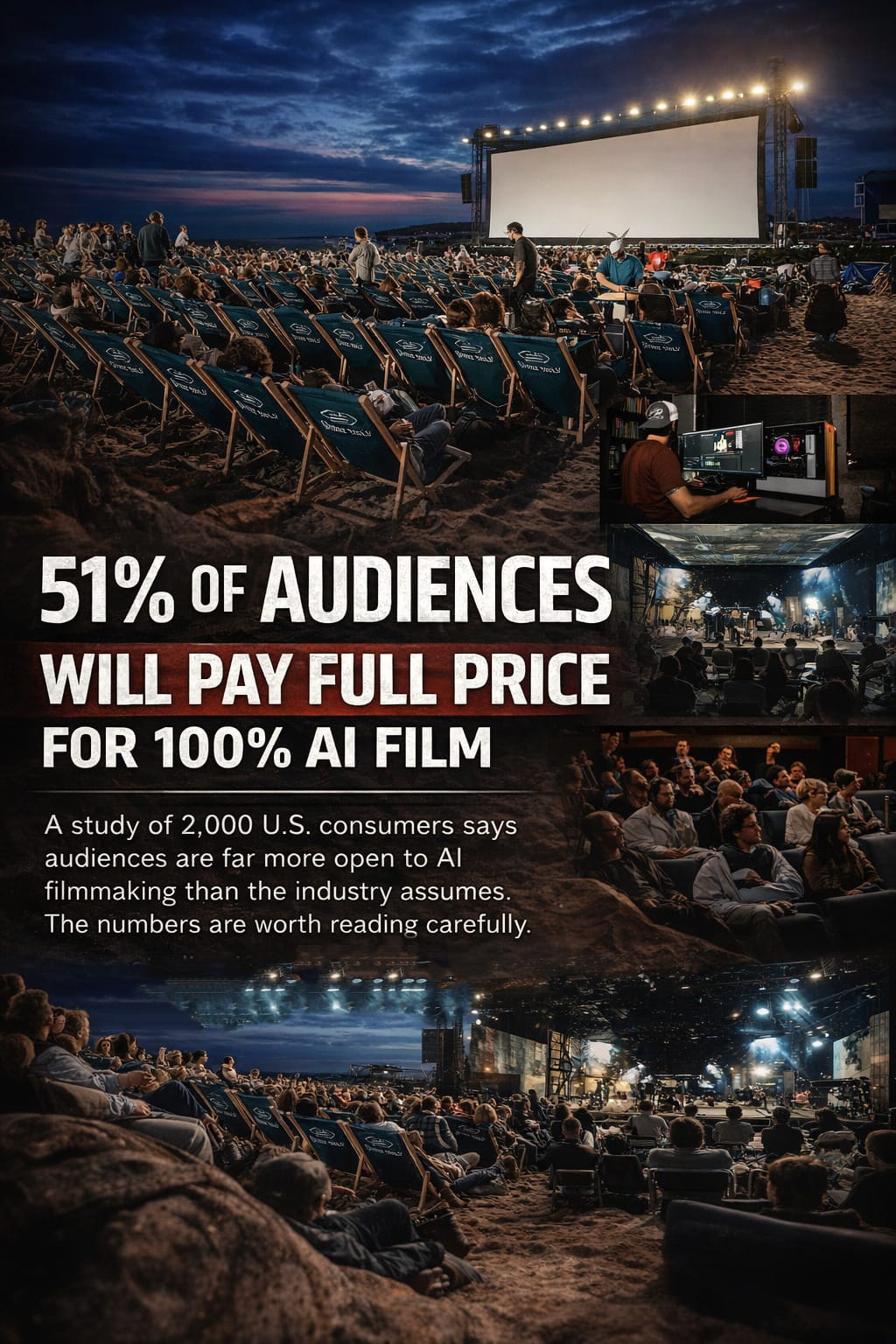
- 51% of respondents said they would pay full ticket price for a 100% AI-generated film—as long as the story is compelling.
- 64% believe that human + AI collaboration will produce higher-quality premium content.
- 76% want AI-powered personalization, including tools that recommend and curate content tailored to their preferences.
These findings challenge the long-standing belief that audiences are resistant to AI in filmmaking.
A Shift in How We Consume Content
The report highlights a deeper transformation beyond film:
- Consumers expect to spend 29% more time on AI-driven platforms this year.
- This comes alongside an 11% decline in traditional broadcast and cable viewing.
This isn’t just a trend—it’s a structural shift. AI-powered streaming platforms and social media are rapidly becoming the primary destinations for entertainment.
The Trust Gap: Opportunity and Challenge
- Only 51% of consumers feel confident distinguishing between AI-generated and human-created content.
- Many users express concerns about privacy and data usage, even as they demand personalized experiences.
This creates a unique tension: audiences want smarter content recommendations but remain cautious about how their data is used.
Why AI Curation Matters Most
- Understand individual preferences
- Adapt to viewing habits
- Deliver highly personalized recommendations.
This makes AI not just a production tool, but a daily companion in content discovery.
Story Still Comes First
One insight stands above all:
Technology doesn’t replace storytelling—it amplifies it.
The willingness to watch AI-generated films depends on one key condition: the story must be compelling.
This puts AI on equal footing with traditional filmmaking. Whether created by humans, AI, or both—the audience ultimately cares about the experience.
- Faster Production Cycles
- Reduced Costs
- Enhanced Realism
- Scalable Content Creation
- Improved Creative Flexibility
What This Means for the Future
The data points to a clear direction:
- AI is becoming normalized in content consumption
- Collaboration between humans and AI is the preferred creative model
- Personalization will define the next generation of platforms.
For creators and studios, this is a moment of opportunity. As AI tools continue to evolve, the barrier to high-quality production is lowering—while audience expectations remain focused on storytelling.
Final Thought
AI in media is no longer a question of if—it’s a question of how well.
The platforms and creators who succeed will be those who use AI not just to produce content faster, but to tell better, more engaging stories.